The Pad Was Never the Fix
Women's Wellbeing Daily · Health
You've Bought the Pads for Years. Here's the Uncomfortable Truth No One Told You About Why You Still Need Them.
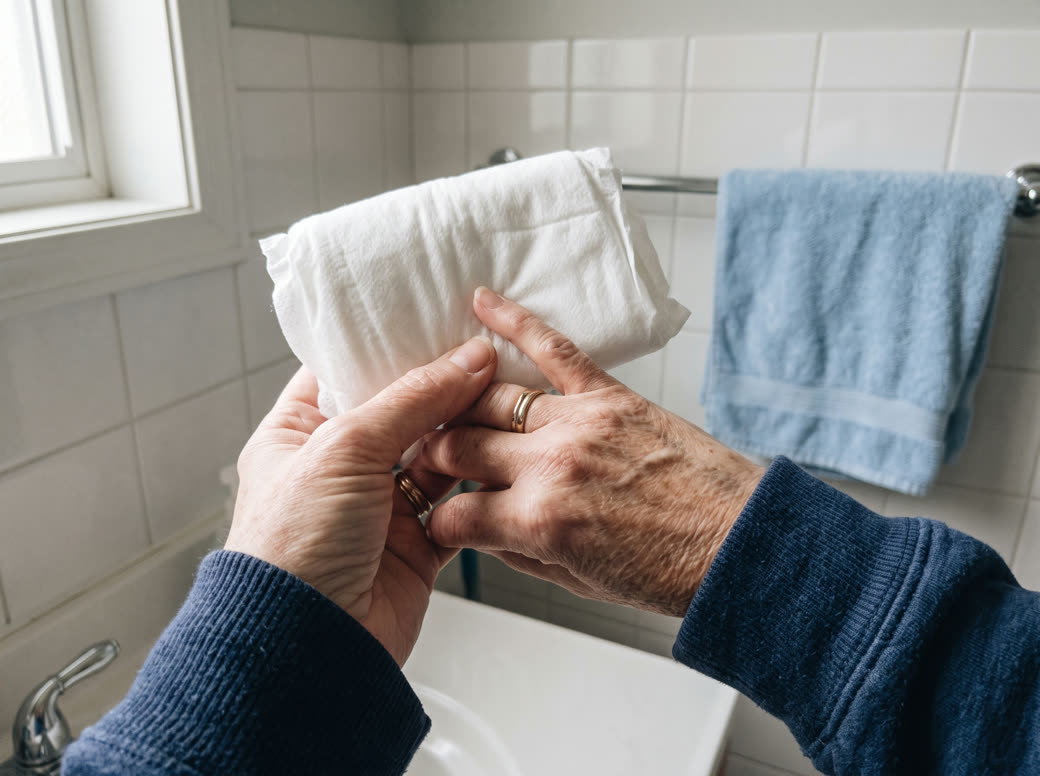
If this is a familiar sight, please read to the end.
You have a system. There's a stash in the bathroom cabinet, a couple tucked in your purse, a spare in the glovebox. You buy the box on your grocery run, slid quietly under the other things on the belt. And the pad has never once let you down the way your own body did. It is the most reliable thing in this whole ordeal.
So I want to be careful with what I say next, because you were never wrong to reach for it. Reaching for the pad was survival and dignity, done with the only tool anyone ever handed you.
But here is the truth that took me years to see: every pad in your cabinet is proof the leak got out again. A pad sits in your underwear, a full layer downstream of where the leak actually starts. It is a catcher. It was engineered, brilliantly, to absorb what has already escaped, and to have you back at the shelf next month. It was never, not once, designed to stop the leak. It can't reach the place the leak begins.
"Even though I no longer have periods, I've probably used more pads since I went into menopause than I ever did during my period years."
And it quietly gets worse. When one pad starts failing you, the sensible thing is to buy a thicker one, then to change more often, then to wear the thickest one you own to bed. Each of those is a bigger catcher for a leak that is opening wider. None of them is a repair. It's the slow slide so many of us know by heart, and the words we whisper to ourselves say it all: "I started wearing pads. I might change to diapers."
What is actually leaking, and why nothing in that aisle can reach it
The tube that carries urine out of you is held closed by a small ring of collagen at the bladder neck, a seal that keeps you shut without you ever thinking about it. That seal depends on estrogen to stay plump and springy. When estrogen falls after menopause, the collagen thins, the ring loses its tension, and it stops closing all the way. It has a name almost no one says out loud: Pelvic Seal Fade.
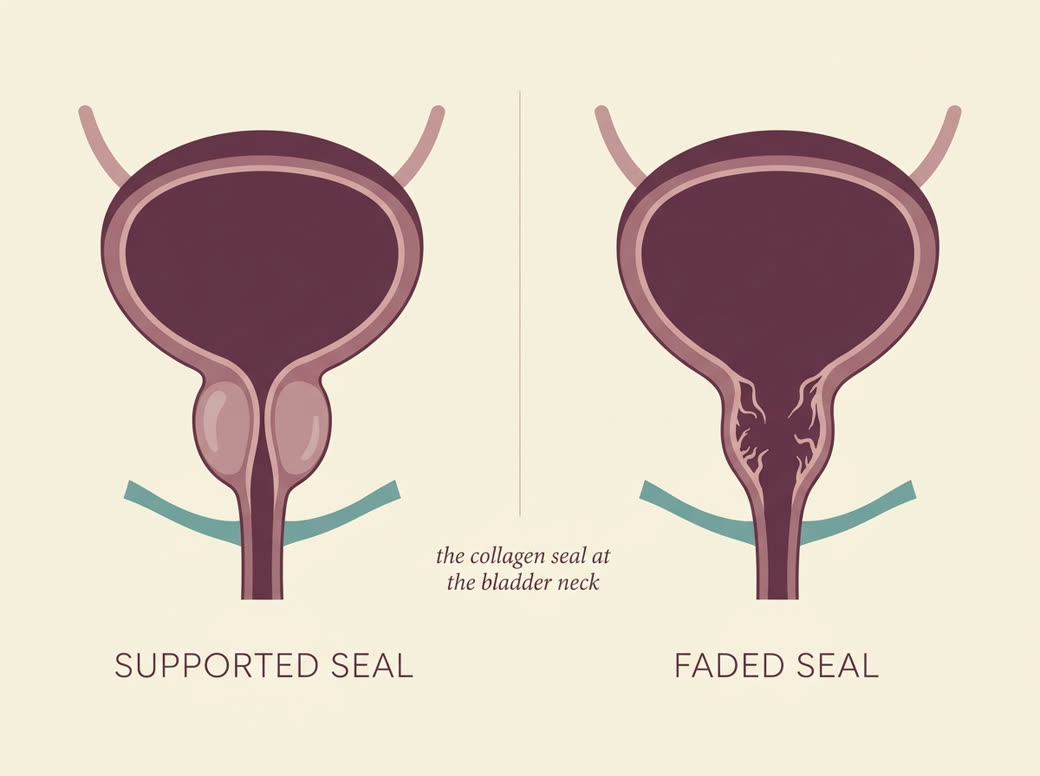
A supported seal closes. A faded one leaks. This is the part no pad was ever aimed at.
Once you see it, the whole aisle makes a sad kind of sense. The seal opens; the pad catches what falls. It is all downstream. And the reason you've needed a fresh one every single day for years is that the seal has been opening every single day for years, completely unaddressed and unfed.
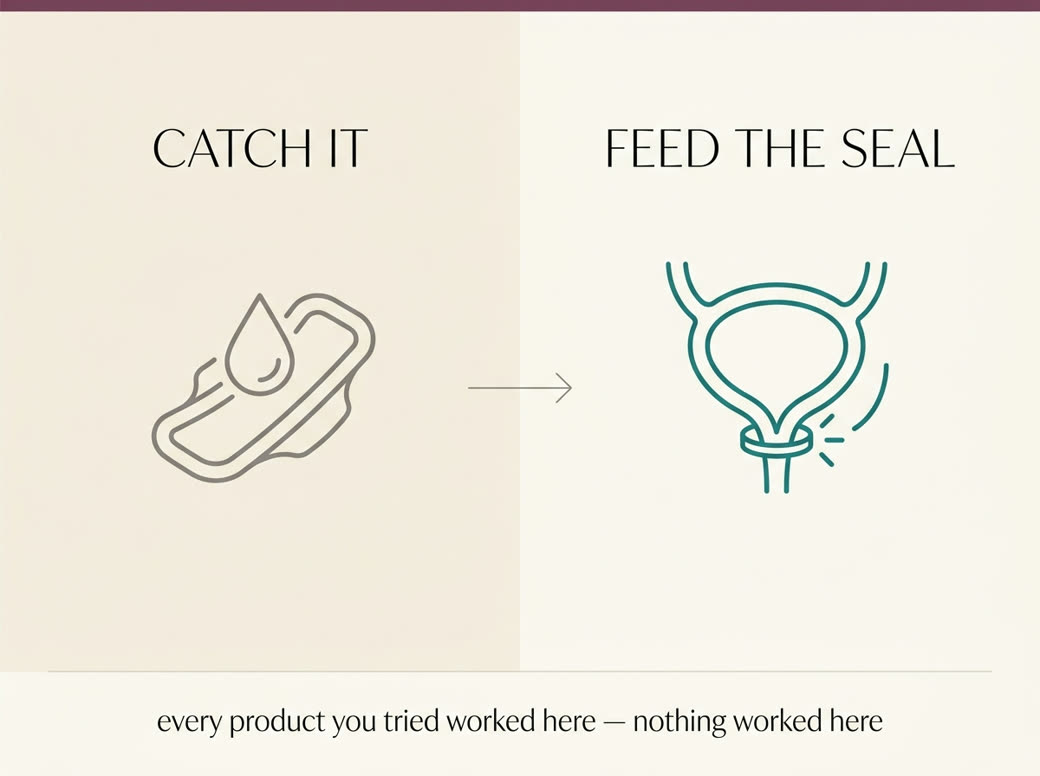
Everything you own works on the left. Nothing you've tried has worked on the right.
The first thing built to feed the seal instead of hide it
The tissue of that seal can be fed. There is a specific, studied combination of pumpkin seed extract and soy germ that works on exactly the collagen the estrogen drop stopped supporting, not by catching leaks, but by nourishing the seal at the bladder neck itself. It's the blend inside Veylor Pelvic Seal Support, and it is the first thing in this whole story aimed at the cause instead of the consequence.
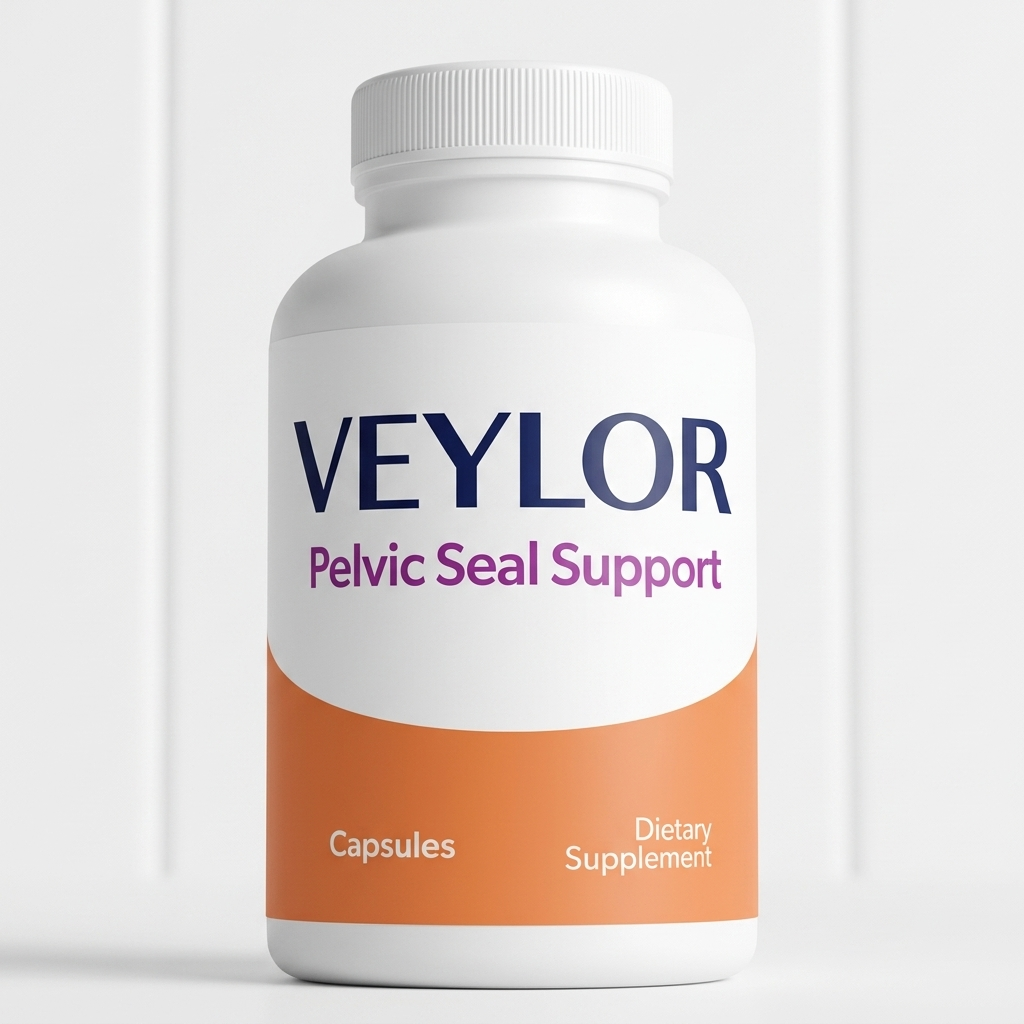
Veylor Pelvic Seal Support · pumpkin seed extract + soy germ, at the studied dose.
And it's studied, not just claimed. In a 12-week clinical trial of 120 women, this blend produced about a third fewer nighttime bathroom trips, and more than 9 in 10 women chose to keep taking it, versus about half on the placebo, with no adverse events reported.
The doubts I had to get past
"It's another gimmick, expensive pee powder." Most of the category earns that name. This one has a placebo-controlled study and a printed dose you can actually check, which is exactly what the junk never has.
"It'll take weeks." It will. The pad works today, but it will also still be in your cabinet next year. This is the first thing that could empty the cabinet for good, and it comes with a 90-day, keep-the-bottle guarantee, so being wrong costs you nothing but the wait. Keep your doctor in the loop as always.
Women who finally put the pads down

Carol T.
★★★★★ Verified Buyer"I have not worn a pad in a month. A month. I keep opening the cabinet just to look at the box I haven't touched. I did not think this was possible at 68."

Diane R.
★★★★★ Verified Buyer"From four pads a day down to one, then to a dry one, then to none. I let the auto-ship lapse and felt something lift off my chest I didn't know I'd been carrying."

Brenda S.
★★★★★ Verified Buyer"I was headed for the diaper aisle and I knew it. This turned the whole thing around. My pads are dry now, that to me has been a miracle."

Stop paying to catch it. Feed the seal.
You already spend on pads every month, with no end in sight. Try feeding the cause instead, with 90 days to see it work and nothing lost if it doesn't.
90-day keep-the-bottle guarantee · Free discreet shipping · Cancel anytime
The drawer stays full when you stop reaching into it. Not because you're rationing pads, but because you finally fed the one thing every pad was quietly covering for.
These statements have not been evaluated by the Food and Drug Administration. This product is not intended to diagnose, treat, cure, or prevent any disease. Individual results vary. Persistent or severe urinary symptoms can have medical causes; please talk with your doctor.
Advertorial. Produced for Veylor. The account above is a composite reflecting common experiences shared by women managing bladder leaks; product statements are supported by the referenced clinical research on the pumpkin-seed-extract and soy-germ blend.